Jharia Underground Coal Fire, Dhanbad
Jharia Coal Fire Dhanbad — Underground Mine Fire Heritage, World's Longest Burning Fire
The Burning Mountain — A Century-Old Underground Coal Fire Visible from the Surface
About Jharia Underground Coal Fire, Dhanbad
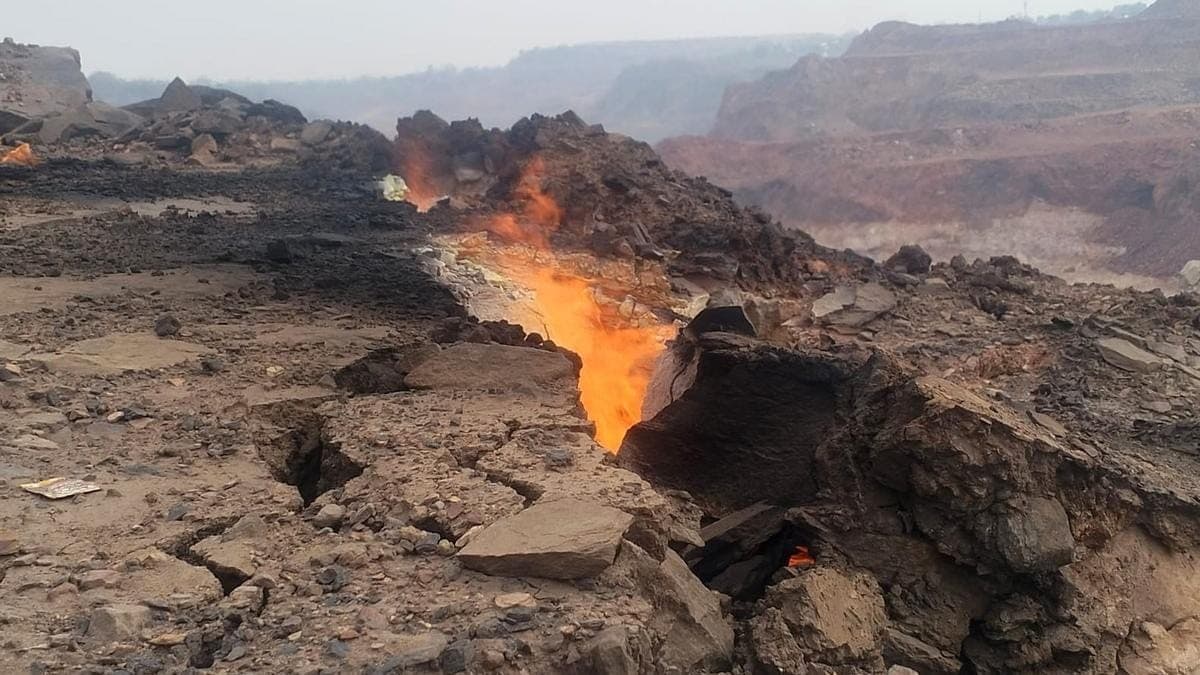
The Jharia coalfield in Dhanbad district has been burning underground since 1916 — one of the longest-lasting mine fires in history. The fire, consuming coking coal seams 18–180 metres below the surface, covers an area of over 9 sq km and manifests on the surface as cracked, subsidence-prone ground with smoke vents, glowing fissures at night, and a perpetual haze visible in winter mornings. The Jharia mine fire is one of India's most dramatic industrial heritage landscapes and an ongoing environmental and humanitarian crisis.
The Jharia coal fire started in 1916 when spontaneous combustion ignited exposed coal seams in abandoned mine workings. Over a century later, the fire continues to advance through the coking coal seams of the Jharia coalfield — one of India's most valuable geological assets, as Jharia coal is India's only source of prime coking coal for steel production. The fire's advance has already consumed over 37 million tonnes of irreplaceable coking coal. The surface manifestation of the underground fire is haunting. In the active zones, the ground is hot underfoot, cracks and subsidence create an unstable landscape, and smoke vents emit sulphurous gases that hang in the air. At night — and particularly in the cool November–February period when temperature differentials are greatest — the glowing fissures and smoke rising from multiple points across a dark landscape create an image of geological apocalypse that has attracted photographers and documentary filmmakers from around the world. Hundreds of thousands of people live in the active fire zones — the communities of Jharia have been the subject of India's largest mine-fire displacement programme for decades, with relocation schemes moving families from the most dangerous areas to Belgaria township while the fires continue below their neighbours' homes. The human dimension of Jharia is inseparable from the geological spectacle: it is simultaneously a dramatic natural phenomenon and an ongoing crisis of vulnerable communities. Visiting Jharia requires responsible conduct. The active fire zones are genuinely hazardous — sudden ground subsidence has caused fatalities — and visitors must stay on established roads and avoid walking on cracked or steaming ground. The recommended approach is by vehicle with a local guide who knows which areas are accessible and which are not. The experience is most dramatic at night and in winter when the fire's surface signs are most visible.
Plan Your Visit
Get personalised travel recommendations for Jharia Underground Coal Fire, Dhanbad
Enquire NowQuick Info
November to February
Dhanbad
heritage
Location
Dhanbad District, Jharkhand · 153 km from Ranchi
Jharia Underground Coal Fire, Dhanbad
Dhanbad District, Jharkhand
Frequently Asked Questions About Jharia Underground Coal Fire, Dhanbad
Common questions about visiting Jharia Underground Coal Fire, Dhanbad, Jharkhand
The Jharia underground coal fire has been burning since 1916 — over a century — making it one of the longest continuously burning mine fires in history. It covers more than 9 sq km of the Jharia coalfield in Dhanbad district and has consumed tens of millions of tonnes of coking coal.
November to February for the most dramatic experience. The glowing fissures and smoke vents are most visible at night in winter when temperature differentials between ground and air are greatest. Early evening visits allow both daylight and night observation.
Visiting requires caution and a local guide. Active fire zones have genuinely hazardous ground — sudden subsidence has caused fatalities. Stay on established roads and never walk on cracked, steaming, or hot ground. A local guide who knows which areas are accessible is strongly recommended.
Looking for a Stay?
Find the best hotels and resorts near your destination
Need a Ride?
Book a comfortable AC car with driver for your Jharkhand trip
Explore More Destinations in Jharkhand
Continue your Jharkhand adventure with these nearby and similar destinations